Dual Carriageways – Joining, Lane Discipline and Overtaking
Learn how to join safely using acceleration lanes, maintain correct lane discipline, overtake confidently, and leave dual carriageways without unnecessary risk.
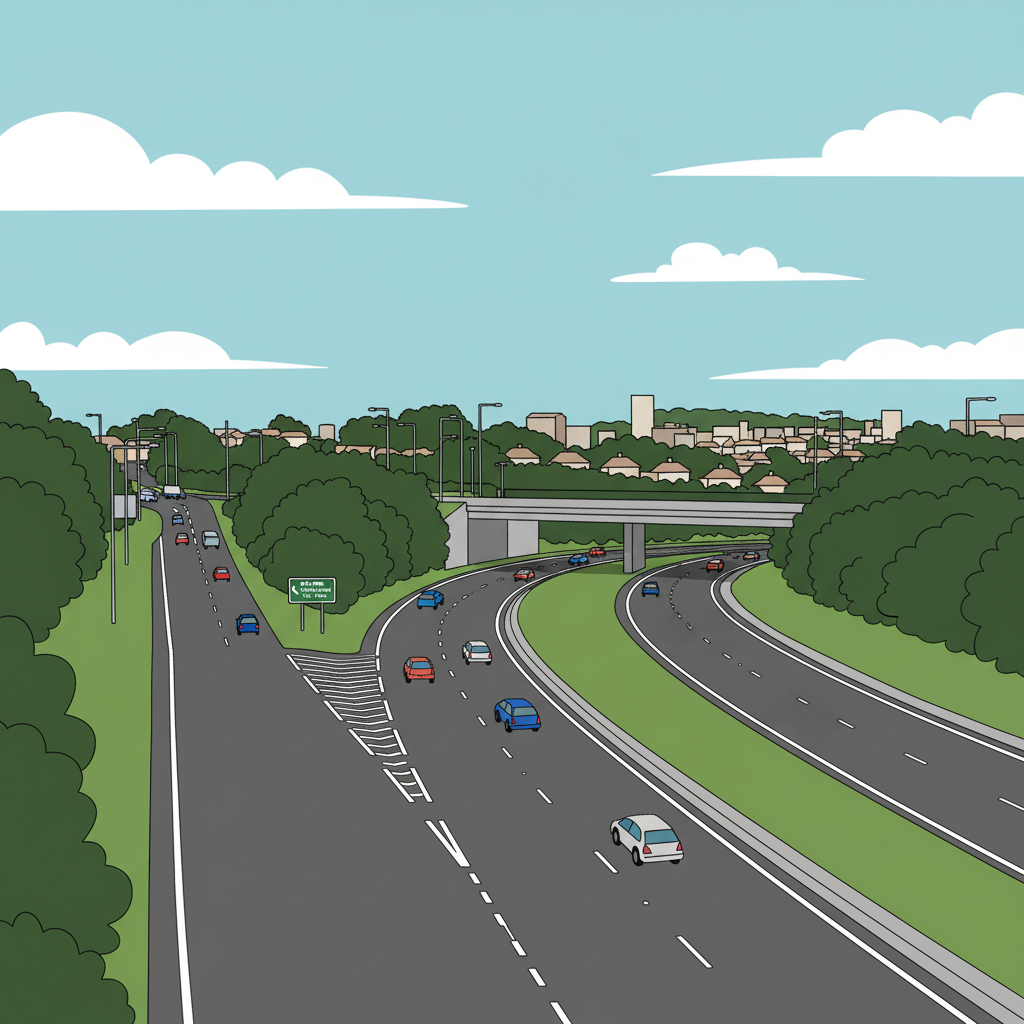
What You Will Learn
Dual carriageways involve higher speeds, multiple lanes, and faster decision-making. This guide explains how to join safely, choose the correct lane, overtake correctly, and leave a dual carriageway without unnecessary risk.
You will learn:
- What defines a dual carriageway
- How to join safely using acceleration lanes
- Correct lane discipline
- When and how to overtake
- Safe use of mirrors and signals at higher speeds
- How to leave a dual carriageway
- Common mistakes to avoid
Understanding Dual Carriageways
A dual carriageway is a road with a central reservation separating traffic travelling in opposite directions.

Key Features
Two or more lanes in each direction
Multiple lanes allow for different speeds and overtaking opportunities.
Central reservation or barrier
Physical separation between opposing traffic flows.
Higher speed limits than single carriageways
Usually 70 mph unless signs indicate otherwise.
Entry and exit slip roads
Dedicated lanes for joining and leaving the carriageway safely.
Important: Dual carriageways are designed for traffic flow, not lane-by-lane cruising.
Approaching a Dual Carriageway
Preparation is essential due to speed differences.
Observation
- Check mirrors early
- Assess traffic speed and gaps
- Identify your joining lane
Speed Awareness
Traffic may be travelling much faster than on other roads.
You must match speed safely before joining.
Joining Using a Slip Road
Use the slip road to build speed and assess traffic.

Step-by-Step: Joining Safely
Check interior and right mirror
Signal right if needed
Accelerate firmly along the slip road
Match the speed of traffic on the dual carriageway
Look for a safe gap
Merge smoothly without stopping
Cancel signal once established in lane
Warning: Do not stop on a slip road unless traffic is stationary.
Lane Discipline on Dual Carriageways
Left Lane
- Normal driving lane
- Use unless overtaking
Right Lane(s)
- Overtaking slower traffic
- Return to the left once complete
Important: Lane hogging is unsafe and illegal.
Step-by-Step: Overtaking on a Dual Carriageway

Check interior and right mirror
Signal right
Check right blind spot
Move smoothly into the overtaking lane
Maintain a steady, legal speed
Pass the vehicle safely
Check mirrors again
Signal left
Return to the left lane when clear
Remember: Overtake only when it is legal and safe.
Speed Control and Awareness
Managing Speed
- Observe speed limit signs
- Adjust speed for weather and traffic
- Maintain safe following distances
Safe Distances
Use at least a 2-second gap in dry conditions.
Increase this in wet or poor conditions.
Leaving a Dual Carriageway
Plan early for exits.

Step-by-Step: Leaving Safely
Identify exit signs early
Check mirrors
Signal left in good time
Move into the left lane if not already there
Enter the slip road
Reduce speed gradually
Adjust to the new road conditions
Warning: Avoid sudden braking on the main carriageway.
Safety and Control
Observation
- Scan far ahead
- Watch for vehicles changing lanes
- Anticipate slow-moving traffic
Positioning
- Stay centred in your lane
- Avoid unnecessary lane changes
Judgement
- Do not rush gaps
- Be decisive but calm
Common Mistakes and How to Avoid Them
Stopping on a slip road
Accelerate to match traffic speed.
Joining too slowly
Use the full length of the slip road.
Lane hogging
Return to the left after overtaking.
Late signalling
Signal early to give others time to react.
Hard braking on exits
Slow down only after entering the slip road.
Frequently Asked Questions
What is the speed limit on a dual carriageway?
The national speed limit for cars on dual carriageways is 70 mph. However, always check for signs that may indicate a lower limit. Adjust your speed for weather conditions, traffic, and visibility.
Do I always have to use the left lane?
Yes. The left lane is the normal driving lane. Only use right lanes for overtaking. Return to the left as soon as it is safe to do so after passing another vehicle.
What if I miss my exit?
Do not attempt to brake suddenly or reverse. Continue on the dual carriageway and take the next exit, or find an alternative route. Missing one exit is safer than risking a collision.
Can learners drive on dual carriageways?
Yes, learners can drive on dual carriageways with a qualified instructor. Many instructors introduce dual carriageway driving after learners have gained sufficient experience on various road types.
Next Steps
Take your skills to the next level by learning how to drive safely on motorways with advanced traffic management techniques.
The next guide in this series is: