Meeting, Crossing and Overtaking
Master the skills of dealing with oncoming traffic, parked vehicles, and narrow roads. Learn to judge space, understand priority, and pass safely without rushing.
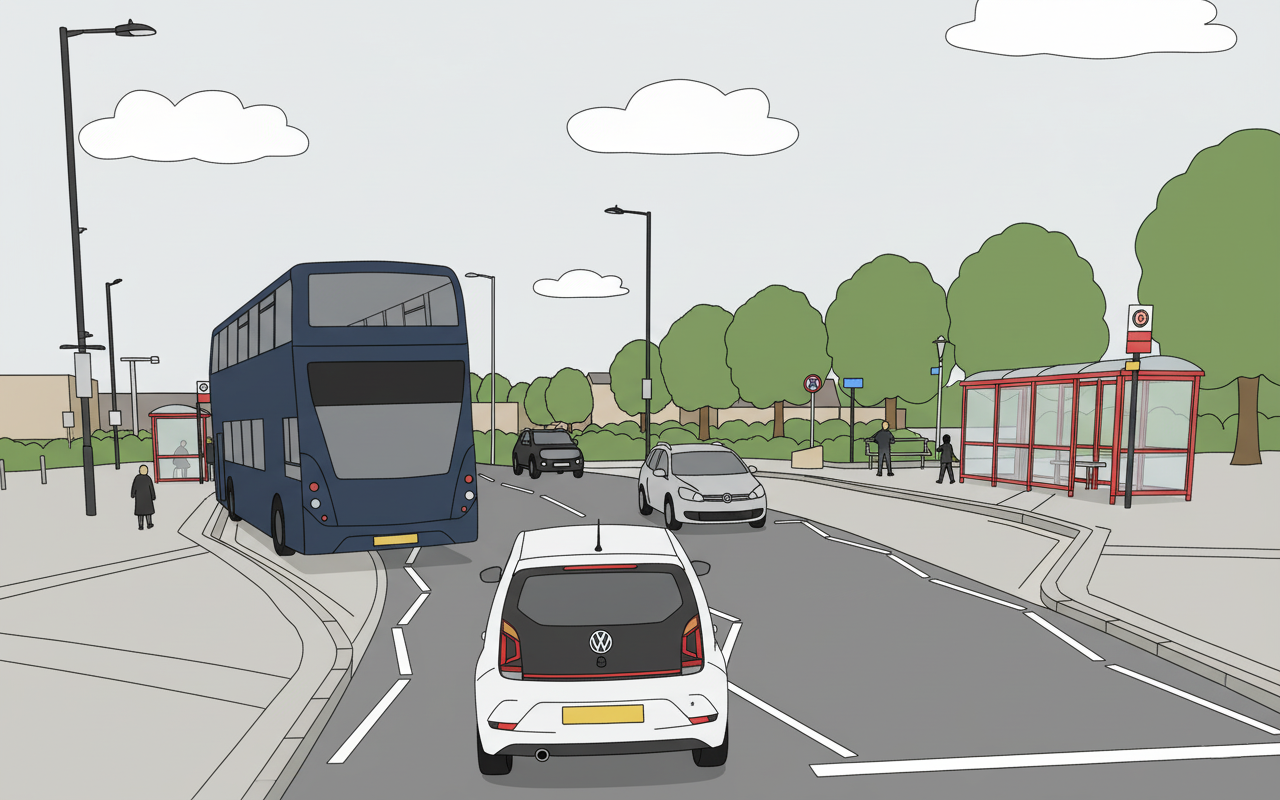
What You Will Learn
Meeting, crossing, and overtaking involve dealing with oncoming traffic, parked vehicles, and narrow roads. This guide teaches you how to judge space, understand priority, and pass safely without rushing.
You will learn:
- How to identify meeting and crossing situations
- How priority works
- How to handle narrow roads and parked cars
- How to judge safe passing distances
- How to meet oncoming traffic safely
- How to overtake slower vehicles
- Common mistakes to avoid
Understanding Meeting and Crossing Situations
Meeting and crossing situations occur when two vehicles travelling in opposite directions must pass each other safely.
Narrow Roads
There may not be enough room for two cars to pass.

Parked Vehicles
One driver may need to give way depending on which side the obstruction is on.

Tight Bends
Visibility may be limited; extra caution is required.

Single Track Roads
Drivers must use passing places to allow others through.

These situations require clear judgement and controlled speed.
Understanding Priority
Priority determines who should proceed first.
If the obstruction is on your side
You usually give way.
If the obstruction is on the other side
You normally have priority, if safe.
If both drivers arrive together
Use eye contact and speed cues to communicate.
Courtesy Always Applies
Give way if it is safer to do so.
Assessing Space and Clearance
Before passing an obstruction, consider:
- The width of the gap
- The speed of oncoming vehicles
- Whether both cars can safely pass
- Whether you need to wait or they should wait
Clearance rules:
- Leave a door's width when passing parked cars
- Give cyclists at least 1.5 metres
- Pass pedestrians slowly and with care
Step-by-Step: Meeting Traffic
Identify the obstruction early.
Check mirrors.
Reduce speed smoothly.
Decide who has priority.
If giving way, stop early and hold position.
If proceeding, move at low, controlled speed.
Make eye contact if helpful.
Resume normal speed only when fully clear.
Step-by-Step: Crossing Safely
Slow down as you approach the narrowing.
Keep a steady position slightly left in your lane.
Assess oncoming traffic early.
If both vehicles can pass, continue slowly.
If not, be ready to stop.
Allow the other driver through when appropriate.
Good crossing technique relies on patience, timing, and awareness.
Step-by-Step: Passing Parked Vehicles
Check interior and right mirror.
Move out early and gently.
Treat parked cars like mini hazards — observe continuously.
Keep a safe clearance from doors and pedestrians.
Watch for brake lights or movement inside vehicles.
Return to your lane only when clear.
Avoid weaving in and out of parked vehicles at speed.
Step-by-Step: Overtaking Safely
Overtaking is an advanced skill that must be done only when fully safe.
Check mirrors and blind spots.
Ensure the road ahead is completely clear.
Keep a safe following distance before overtaking.
Signal in good time.
Move out smoothly and accelerate past the vehicle.
Check mirrors again.
Return to your lane when you can clearly see the vehicle behind you.
Never overtake near:
- Bends
- Humps
- Junctions
- Solid white lines
Safety and Control
Speed Control
- Slow down early
- Use clutch control in tight spaces
- Maintain a walking pace when clearance is limited
Positioning
- Do not drive too close to the kerb
- Give obstacles and parked cars plenty of room
Observation
- Look ahead for hazards early
- Watch oncoming vehicles' speed and positioning
- Identify safe waiting points
Common Mistakes and How to Avoid Them
Approaching too fast
Slow down earlier and plan your position.
Failing to give way when obstruction is on your side
You must normally wait.
Leaving too little space when passing obstacles
Keep a door's width where possible.
Returning to lane too early after overtaking
Ensure the overtaken vehicle is fully visible in your mirror.
Misjudging oncoming traffic
If unsure, wait — caution is safer.
Frequently Asked Questions
Do I always give way when cars are parked on my side?
Usually yes, but if the obstruction is on the other side of the road, you have priority. Always use good judgement and courtesy—if it's safer to wait, do so.
Why do I feel pressured when cars are coming toward me?
This is a normal learner experience. The key is to slow down early, assess the situation carefully, and remember that the other driver is also assessing. With experience, you'll learn to judge space better and feel more confident.
How slow should I go when passing close obstacles?
Aim for a walking pace (around 5–10 mph or less) when clearance is tight. Your instructor will help you judge the appropriate speed based on the specific situation.
Can I overtake cyclists?
Yes, but only when it is completely safe. Give cyclists at least 1.5 metres clearance, move out smoothly, and ensure the road ahead is clear. Never rush or squeeze past a cyclist.
Next Steps
Continue building your skills by learning how to handle roundabouts safely and navigate them with confidence.
The next guide in this series is: