Motorways – Rules, Lanes and Smart Motorways
Motorways are designed for high-speed, long-distance travel and require strong observation, lane discipline, and forward planning. Learn how to join and leave safely, understand smart motorway technology, and drive confidently at high speeds.
What You Will Learn
Motorways are designed for high-speed, long-distance travel and require strong observation, lane discipline, and forward planning. This guide explains how to join and leave motorways safely, use lanes correctly, understand motorway rules, and drive confidently on smart motorways.
You will learn:
- What defines a motorway
- How to join safely
- Correct lane discipline
- How to overtake on a motorway
- How to leave a motorway safely
- Smart motorway rules
- Common motorway mistakes to avoid
Understanding Motorways
A motorway is a high-speed road designed for continuous traffic flow, with controlled access and no junctions at the same level.

Key Features
Multiple lanes in each direction
Designed for high-speed traffic flow with controlled access.
Central reservation or barrier
Physical separation between opposing traffic flows.
No pedestrians, cyclists, or slow-moving vehicles
Only motor vehicles capable of motorway speeds are permitted.
Entry and exit via slip roads only
Controlled access points for joining and leaving safely.
Blue motorway signs
Distinctive blue signage indicates motorway routes and exits.
Important: Motorways require planning well ahead due to speed and traffic volume.
Joining a Motorway
Joining a motorway safely depends on good use of the slip road.
Preparation
- Check mirrors early
- Identify traffic speed
- Select an appropriate gear
Speed Awareness
Traffic may be travelling at high speeds.
You must match speed safely before joining.
Step-by-Step: Joining Safely
Use the slip road to build speed and assess traffic.

Check interior and right mirror
Signal right if required
Accelerate firmly along the slip road
Match the speed of motorway traffic
Identify a safe gap
Merge smoothly without stopping
Cancel signal once established in lane
Warning: Do not stop on the slip road unless traffic on the motorway is stationary.
Lane Discipline on Motorways
Left Lane
- Normal driving lane
- Use unless overtaking
Middle and Right Lanes
- For overtaking only
- Return to the left when safe
Important: Poor lane discipline increases congestion and risk.
Overtaking on a Motorway
Overtaking must be planned and controlled.

Step-by-Step: Overtaking Safely
Check interior and right mirror
Signal right
Check right blind spot
Move smoothly into the overtaking lane
Maintain a legal, steady speed
Pass the vehicle safely
Check mirrors
Signal left
Return to the left lane when clear
Remember: Never weave through traffic or undertake unless traffic is moving slowly in queues.
Speed and Following Distance
Speed Limits
- National speed limit usually applies unless signs state otherwise
- Always follow variable speed limits when displayed
Safe Following Distance
- Use at least a 2-second gap in dry conditions
- Increase to 4 seconds or more in wet or poor conditions
Good spacing gives you time to react safely.
Leaving a Motorway
Plan early and avoid last-minute decisions.

Step-by-Step: Leaving Safely
Identify exit signs well in advance
Check mirrors
Signal left early
Move into the left lane if needed
Enter the slip road
Reduce speed gradually
Adjust to the new road environment
Warning: Never brake sharply on the motorway itself.
Understanding Smart Motorways
Smart motorways use technology to manage traffic flow.
Variable Speed Limits
Displayed on overhead gantries and must be followed.
Red X Signals
Indicate a closed lane. Never drive in a lane marked with a red X.
Hard Shoulder Use
Some smart motorways use the hard shoulder as a running lane when indicated.
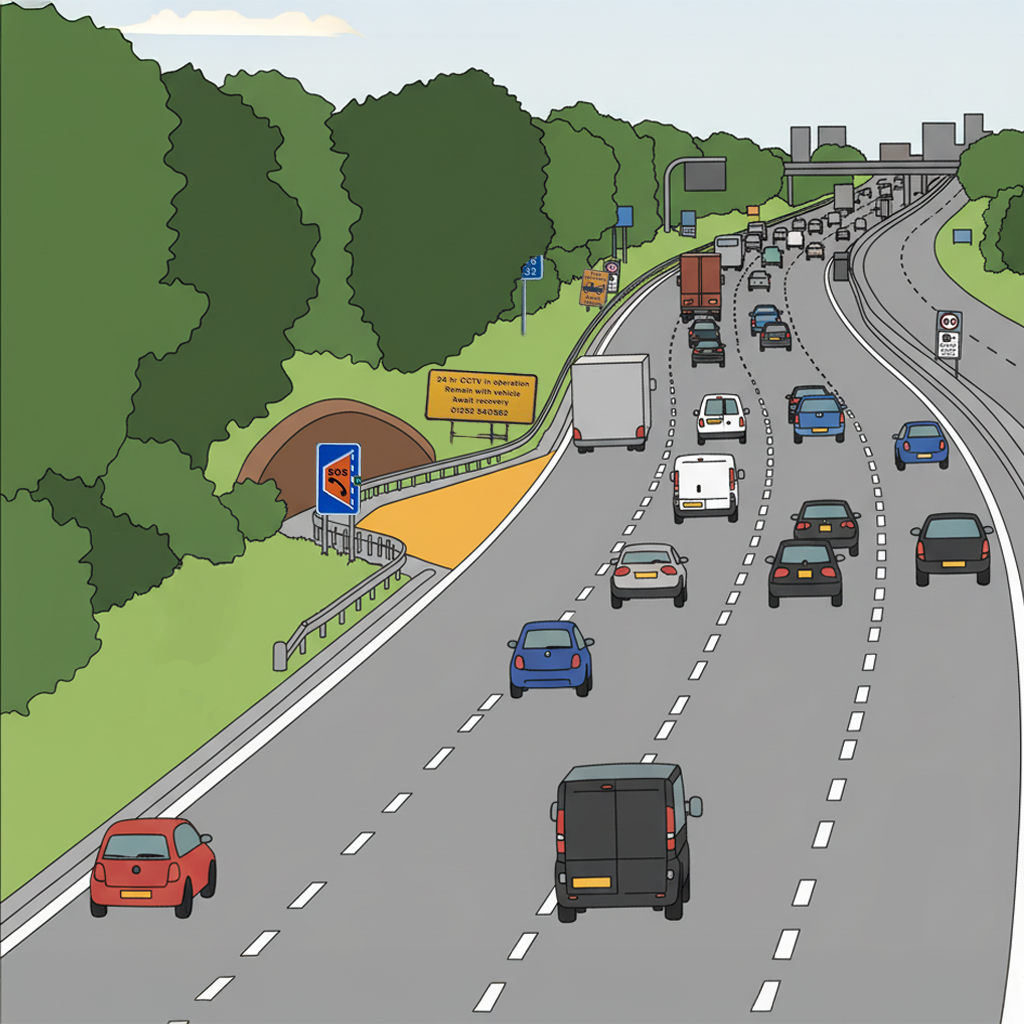
Emergency Areas
Used instead of a hard shoulder on some smart motorways.
Important: Always follow gantry signs rather than roadside signs.
Safety and Control
Observation
- Look far ahead
- Watch brake lights and traffic flow
- Check mirrors frequently
Positioning
- Stay centred in your lane
- Avoid unnecessary lane changes
Judgement
- Do not rush gaps
- Anticipate traffic slowing
Common Mistakes and How to Avoid Them
Joining too slowly
Use the full slip road to match traffic speed.
Lane hogging
Return to the left after overtaking.
Ignoring variable speed limits
Always follow gantry signs.
Late lane changes near exits
Plan early and move gradually.
Driving in a closed lane
Never ignore a red X signal.
Frequently Asked Questions
Can learner drivers use motorways?
Yes, learners can drive on motorways with a qualified instructor, provided they hold a full car licence. The instructor must have passed certain requirements. Many learners gain their first motorway experience during supervised instructor sessions.
What should I do if I break down?
Switch on hazard lights, safely leave the motorway onto the hard shoulder, and move well away from the traffic. If on a smart motorway without a hard shoulder, use an emergency area. Call emergency services from a safe location.
Is undertaking allowed?
Undertaking (passing on the left) is generally not recommended and can be risky. It is only acceptable if traffic is moving slowly in queues or congestion. Never weave through traffic or undertake at speed.
What does a red X mean?
A red X on a gantry sign above a lane indicates that lane is closed. Never drive in a lane marked with a red X. It is there for your safety and that of other road users.
Next Steps
Continue developing your advanced driving skills and confidence in managing complex traffic situations.
The next guide in this series is: