Roundabouts – Basic Approach and Lane Discipline
Learn how to approach roundabouts safely, choose the correct lane, use signals correctly, and exit smoothly with confidence.
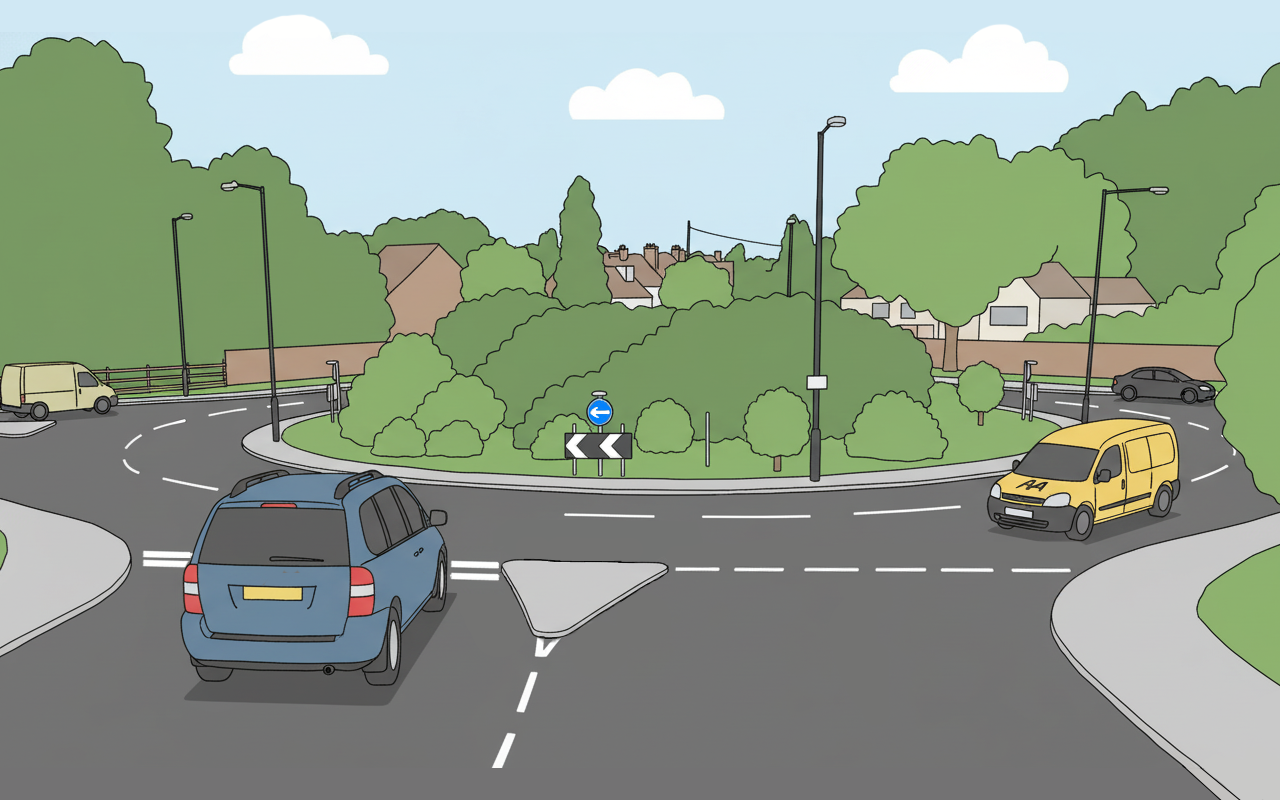
What You Will Learn
Roundabouts are designed to keep traffic flowing while reducing the risk of serious collisions. This guide explains how to approach roundabouts safely, choose the correct lane, use signals correctly, and exit smoothly.
You will learn:
- How roundabouts work
- How to approach safely using MSPSL
- Which lane to use for different exits
- When and how to signal
- How to judge safe gaps
- How to exit correctly
- Common roundabout mistakes to avoid
Understanding Roundabouts
A roundabout is a circular junction where traffic travels clockwise and gives priority to vehicles approaching from the right.
Mini-Roundabouts
Smaller roundabouts often found in residential areas. Vehicles may need to drive over the central marking if necessary.

Standard Roundabouts
Larger roundabouts with clear lane markings and higher traffic flow.

Multi-Lane Roundabouts
Roundabouts with two or more lanes on approach and around the circle. These require early lane planning.

Understanding the type of roundabout helps you plan your approach and lane choice.
Approaching a Roundabout Using MSPSL
Always apply MSPSL when approaching a roundabout.
Mirror
Check the interior mirror, then the relevant side mirror.
Signal
Signal early to show your intention.
Position
Choose the correct lane based on your exit.
Speed
Reduce speed early and select an appropriate gear.
Look
Look right and assess traffic already on the roundabout.
Lane Discipline at Roundabouts
Correct lane choice is essential.
Turning Left (First Exit)
- Use the left lane
- Signal left on approach
- Keep left around the roundabout
Going Straight Ahead
- Usually use the left lane unless signs or markings say otherwise
- Do not signal on approach
- Signal left after passing the exit before yours
Turning Right (Last Exit or Full Circle)
- Use the right lane
- Signal right on approach
- Signal left after passing the exit before yours
Always follow road signs and lane markings if present.
Step-by-Step: Approaching the Roundabout
Identify the roundabout early.
Check mirrors.
Select the correct lane.
Signal if required.
Reduce speed and select the correct gear.
Look right and assess traffic.
Give way to vehicles already on the roundabout.
Proceed only when a safe gap appears.
Step-by-Step: Entering and Circulating
Move off smoothly when safe.
Maintain a steady speed.
Stay in your chosen lane.
Avoid changing lanes unless road markings require it.
Keep observing traffic to your right and ahead.
Smooth, predictable movement helps other drivers understand your intentions.
Step-by-Step: Exiting the Roundabout
Check the interior mirror.
Signal left after passing the exit before yours.
Keep your speed steady.
Watch for pedestrians and cyclists at the exit.
Leave the roundabout smoothly and cancel the signal.
Do not cut across lanes when exiting.
Safety and Control at Roundabouts
Speed Control
- Slow down early
- Use lower gears if needed
- Avoid rushing gaps
Observation
- Look right before entering
- Check ahead for traffic stopping
- Watch for indicators from other drivers
Positioning
- Stay within your lane
- Avoid drifting between lanes
- Follow road markings at all times
Common Mistakes and How to Avoid Them
Choosing the wrong lane
Read signs early and plan ahead.
Signalling too late or too early
Signal clearly and at the correct time.
Failing to give way
Always give way to traffic from the right.
Cutting across lanes on exit
Stay in your lane until fully clear.
Stopping unnecessarily
If the roundabout is clear, continue smoothly.
Frequently Asked Questions
Do I always have to stop at a roundabout?
No. You only need to stop if there is traffic on the roundabout. If the roundabout is clear, you can proceed smoothly. Always reduce speed and be prepared to stop if needed.
What if someone signals incorrectly?
Rely on what the vehicle is actually doing, not just the signal. If a vehicle looks like it is exiting but keeps circulating, stay clear and do not assume.
Which gear should I use?
Approach in second gear for most roundabouts. For mini-roundabouts in residential areas, first gear may be appropriate. Select a gear that allows smooth acceleration once you proceed.
Can I change lanes on a roundabout?
Avoid changing lanes on the roundabout. Stay in your chosen lane and only change if road markings require it. Lane changes increase the risk of collision.
Next Steps
Strengthen your overall knowledge by learning how to understand traffic lights and navigate controlled junctions safely.
The next guide in this series is: