Traffic Lights and Controlled Junctions
Learn how to understand light sequences, approach controlled junctions safely, follow lane markings, and respond correctly to changing signals.
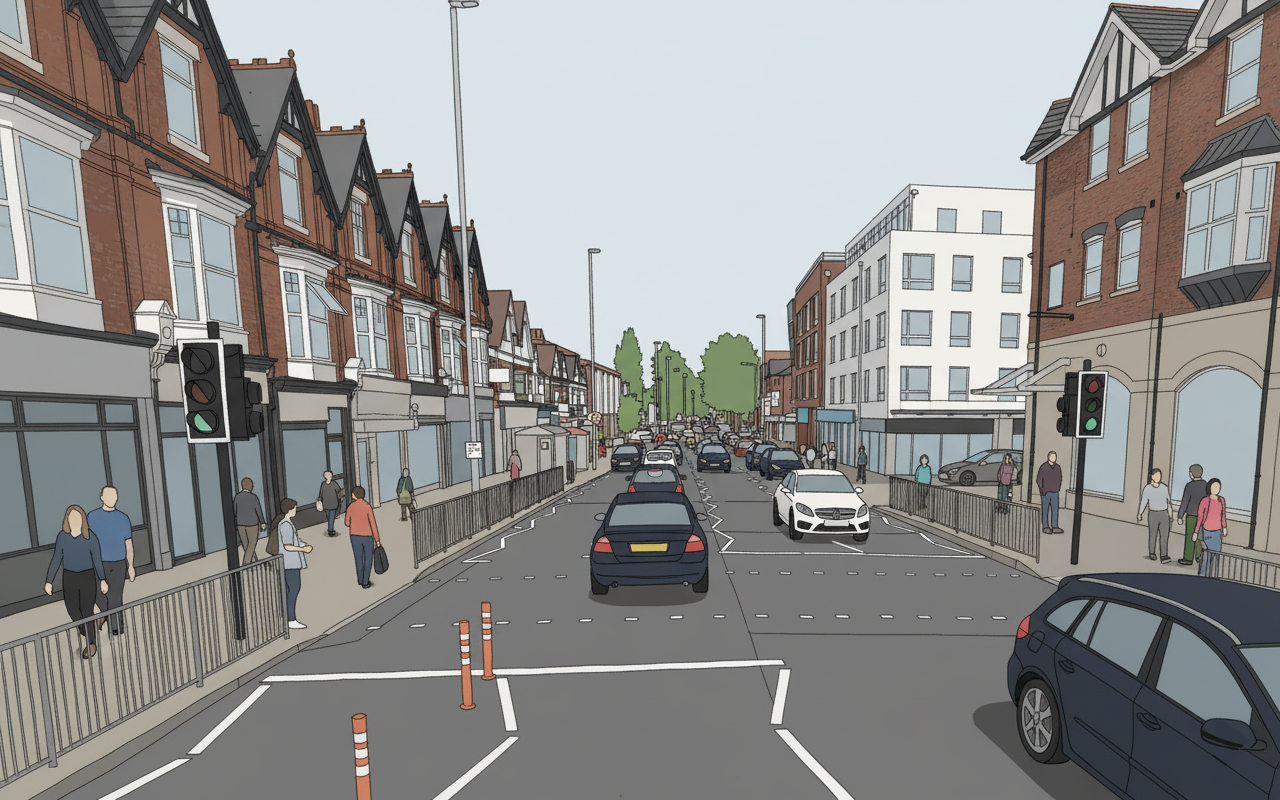
What You Will Learn
Traffic lights and controlled junctions help manage priority and keep traffic flowing safely. This guide explains how to understand light sequences, approach controlled junctions safely, follow lane markings, and respond correctly to changing signals.
You will learn:
- What each traffic light means
- How to approach traffic lights safely
- How to respond to green, amber, and red
- How filter arrows work
- Controlled vs part-controlled junctions
- How to position yourself correctly
- How to avoid common mistakes at traffic lights
Understanding Traffic Light Systems
In the UK, traffic lights are officially termed traffic light signals and are categorized based on the road user they control or their specific application.
Standard Vehicle Signals

Standard Traffic Lights
The primary vertical three-color system (Red, Amber, Green) used at most junctions.

Filter Lights (Green Arrows)
Direction-specific green signals that allow movement while the main signal may still be red.

Temporary Traffic Lights
Portable three-color signals used for temporary roadworks.
Pedestrian Crossing Signals
Often named after birds, these vary in their light sequence and detection technology:

Pelican Crossing
A pedestrian crossing with traffic lights operated by pedestrians.

Puffin Crossing
A smart crossing with sensors that detects if pedestrians are still on the road. It follows the standard vehicle light sequence (no flashing amber).

Toucan Crossing
A combined crossing for both pedestrians and cyclists ("two-can" cross). Cyclists do not need to dismount.

Pegasus (Equestrian) Crossing
Similar to a Toucan but designed for horse riders, featuring higher-mounted buttons.

Zebra Crossing
Not strictly a "traffic light" in the signal sense, but identified by flashing amber globes called Belisha beacons.
Traffic Light Sequences
Understanding the sequence of lights is crucial for safe driving.
Red
Stop and wait behind the stop line.
Red and Amber
Prepare to move but do not proceed until the light turns green.
Green
You may proceed if the road ahead is clear and safe.
Amber
Stop unless you are too close to do so safely.
Lights may have different timings based on traffic flow and junction layout.
Approaching Traffic Lights
Always approach traffic lights with anticipation and caution.
Check mirrors early.
Ease off the accelerator as you approach.
Prepare to brake or continue depending on the signal.
Select the correct gear early.
Watch for changing signals and be ready to stop.
Positioning at Controlled Junctions
Correct positioning ensures safety and predictability for other road users.
Turning Left
- Position left and follow the lane markings
- Do not enter the cycle box; stop at the stop line appropriately
Turning Right
- Position just left of the centre line
- Look for dedicated right-turn lanes where marked
Going Ahead
- Stay centred in your lane
- Follow lane arrows and road markings closely
Understanding Filter Arrows
Filter arrows allow specific movements when the main signal may be red.
Green Filter Arrow
You may turn in the direction of the arrow, even if the main signal is red. However, always give way to pedestrians and cyclists.
Amber Filter Arrow
Prepare to stop unless it is unsafe to do so.
No Filter Arrow
You must obey the main signal.
Filter arrows often appear before heavy turns, such as busy right-turn lanes.
Step-by-Step: Turning Left at Traffic Lights
Check mirrors.
Signal left if turning.
Position close to the left.
Reduce speed and select the appropriate gear.
Follow the stop line and cycle box rules.
When green, proceed only if pedestrians and cyclists are clear.
Turn smoothly and accelerate gently.
Step-by-Step: Turning Right at Traffic Lights
Check mirrors and signal right.
Position just left of the centre line or in the right-turn lane.
Reduce speed and select the correct gear.
Move into the junction when the light turns green, if safe.
Wait in the junction if oncoming traffic is heavy.
Complete the turn when the road is clear.
Exit smoothly into the new road.
Right turns at controlled junctions require patience, especially if oncoming traffic is heavy. Do not rush; wait for a safe gap.
Controlled Junction Safety
Speed Control
- Reduce speed early and anticipate signal changes
- Avoid harsh braking or rushing through late amber
Observation
Always watch for:
- Pedestrians crossing or about to cross
- Cyclists in the cycle box or on the road
- Emergency vehicles
- Vehicles jumping red or amber
- Filter arrow changes
Stop Line Discipline
- Always stop behind the stop line
- Never creep forward unless permitted by the signal
Common Mistakes and How to Avoid Them
Stopping on the wrong side of the line
Brake earlier and plan ahead to stop in the correct position.
Entering the junction too early on a right turn
Wait until the light turns green and the road ahead is clearly safe.
Trying to rush through late amber
Stop unless it is truly unsafe to do so. Crossing on late amber risks collision.
Not noticing filter arrows
Always check the full signal set carefully before proceeding.
Blocking pedestrian or cycle crossings
Leave sufficient space ahead and do not commit to the junction if you cannot clear it.
Frequently Asked Questions
Can I proceed on green immediately?
You may proceed on green only if the road ahead is clear and safe. Always check for pedestrians, cyclists, and other hazards before moving, even if the light is green.
Do I have to stop on amber?
You should stop on amber unless you are too close to the stop line to brake safely. If in doubt, stop. Rushing through amber is dangerous and can result in collision.
What if the lights fail?
Treat a failed traffic light as an uncontrolled junction. Give way to the right, assume other drivers will not stop, and proceed only when it is absolutely safe to do so.
How do I turn right if oncoming traffic never stops?
Wait in the junction box for a safe gap in oncoming traffic. Only complete the turn when you can do so safely. Right turns can take time; be patient and do not rush.
Next Steps
Master higher-speed driving by learning how to join dual carriageways safely, maintain lane discipline, and overtake confidently.
The next guide in this series is: